
January 25, 2026
How Quiet Are Mini Splits? What to Expect in 2026
One of the first things new mini split owners notice isn't the temperature—it's the silence. Here's how quiet mini splits actually are and why it matters more than you might think.
The First Thing People Notice
One of the first things new mini split owners notice after installation isn't the temperature change—it's the silence. Modern ductless mini splits are engineered to operate so quietly that many homeowners forget the system is running at all.
If you're used to the blast of forced air, the clunk of a window unit starting up, or the rattle of old ductwork, a mini split is a genuinely different experience.
Why Mini Splits Are So Quiet
The Noisiest Parts Stay Outside
In a mini split system, the compressor lives in the outdoor unit. The indoor unit contains only a fan and a coil. This design immediately removes the loudest components from your living space.
Compare that to a traditional ducted system or window unit—both of which put noisy mechanical components either inside the room or directly in a wall opening.
Inverter Technology Eliminates Loud Cycling
Traditional HVAC systems:
- Turn on at full power
- Shut off completely
- Repeat the cycle constantly
That hard start-stop pattern creates the jarring noise most people associate with central air or window units. Mini splits use inverter-driven compressors that run continuously at variable speeds—adjusting gradually, avoiding sudden starts and stops. The result is smooth, consistent, near-silent operation.
Low-RPM Fans Move Air Quietly
Indoor mini split units are engineered to move air efficiently at lower fan speeds. Most users describe the sound as quieter than a ceiling fan—a gentle airflow rather than a mechanical blast.
There's also no ductwork, which eliminates an entire category of HVAC noise: no air rushing through vents, no expansion pops, no vibrations through walls and ceilings.
How Quiet Are We Actually Talking?
Modern mini splits typically operate between 19–30 decibels indoors on low settings.
For reference:
- Whisper: ~30 dB
- Refrigerator hum: ~40 dB
- Traditional HVAC startup: 60–80 dB
In many homes, ambient background noise—traffic, a TV in another room, a conversation—is louder than the mini split itself. The system becomes background noise you stop noticing within the first day.
Why Quiet Matters More Than People Realize
In 2026, quiet operation isn't just a nice-to-have—it's expected in the spaces people care about most.
Ideal for:
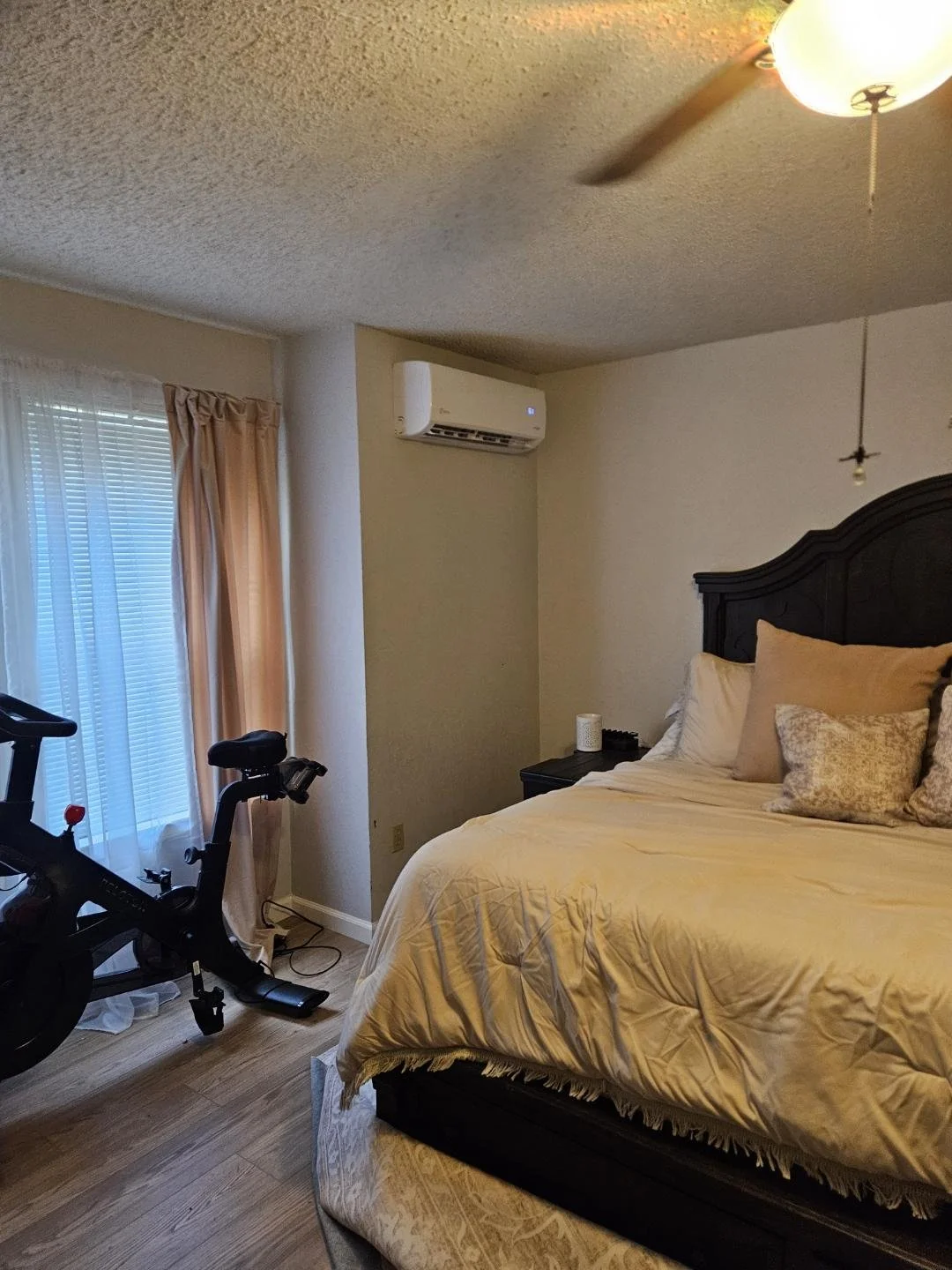
- Bedrooms — sleep without disruption from loud HVAC cycles
- Home offices — stay focused without a system constantly kicking on
- Nurseries — newborns and light sleepers aren't disturbed
- Tiny homes and apartments — small spaces amplify noise
- Vacation rentals — guests notice and leave better reviews
- Hunting cabins — no mechanical noise disrupting the peace of the outdoors
Quiet HVAC directly improves:
- Sleep quality
- Focus and productivity
- Guest satisfaction
- Overall comfort and livability
The Outdoor Unit Is Quiet Too
Even outside, modern mini split condensers are compact and low-vibration. They're designed to be neighbor-friendly—significantly quieter than older outdoor condensers.
This matters for:
- Dense neighborhoods with homes close together
- Multi-unit properties
- Outdoor living areas near the condenser
Installation Quality Affects Noise Level
Even a quiet system can develop unnecessary noise if improperly installed. Quiet performance depends on:
- Proper wall mounting with vibration isolation
- Correct system sizing — an oversized unit runs harder than necessary
- Clean line routing that doesn't create stress on components
A professional installation ensures the system runs exactly as quietly as it's designed to.
Bottom Line: Silence Is a Feature
If you're tired of loud startups, constant fan noise, rattling ductwork, or a system that wakes you up at 2 a.m., a ductless mini split delivers real comfort—without the noise. It's one of the most underrated advantages of going ductless.