
November 15, 2024
How to Heat and Cool Your Garage with a Mini-Split
Garages are one of the most popular applications for mini-splits. Here's everything you need to know about sizing, placement, and installation.
Why Garages Are Perfect for Mini-Splits
Garages present unique HVAC challenges — they're often uninsulated, exposed to extreme temperatures, and disconnected from the main home's duct system. Mini-splits solve all of these issues elegantly.
Whether you use your garage as a workshop, gym, storage space, or man cave, a properly sized mini-split will keep it comfortable year-round.
Sizing Your Unit
Garage sizing depends on:
- Square footage — a standard 2-car garage (~500 sq ft) typically needs a 12,000–18,000 BTU unit
- Insulation level — poor insulation increases the required BTU
- Climate — extreme cold or heat regions require more capacity
- Sun exposure — south-facing garages with lots of windows need more cooling capacity
As a general rule: 1 ton (12,000 BTU) per 400–500 sq ft in a well-insulated garage.
Placement Tips
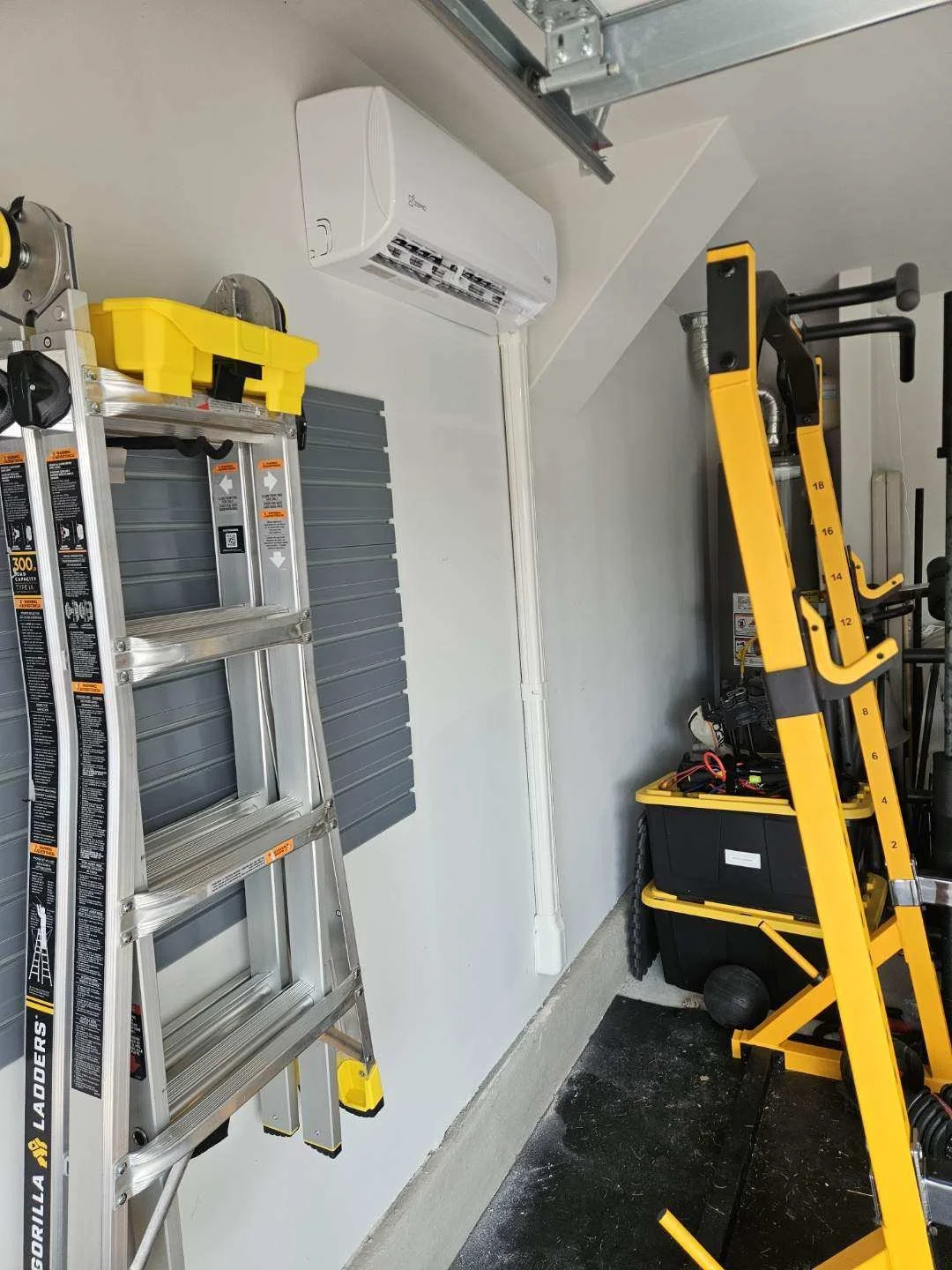
- Indoor unit should be mounted high on an interior wall, away from direct sunlight
- Outdoor unit needs adequate clearance (12–18 inches) on all sides for airflow
- Avoid placing the outdoor unit in areas that collect snow or debris
Installation Notes
Garage installations are typically straightforward. The conduit only needs to pass through one wall, and most garages have accessible electrical panels. A typical single-zone garage installation takes 4–6 hours.
Ready to get started? Give us a call and we'll handle everything.