
May 28, 2026
How Do Mini Splits Work?
Mini splits don't create cold air — they move heat. Here's a clear breakdown of how ductless systems cool and heat your home, and why they work so well in hot climates.
Mini split HVAC systems are one of the most flexible and efficient ways to heat and cool a home, garage, office, shop, or add-on space. Unlike traditional central HVAC systems that rely on ductwork to move air through the entire house, mini splits deliver conditioned air directly into the room or zone where they are installed.
This makes them especially useful in hot climates, where homeowners often need strong cooling, better humidity control, and lower energy waste.
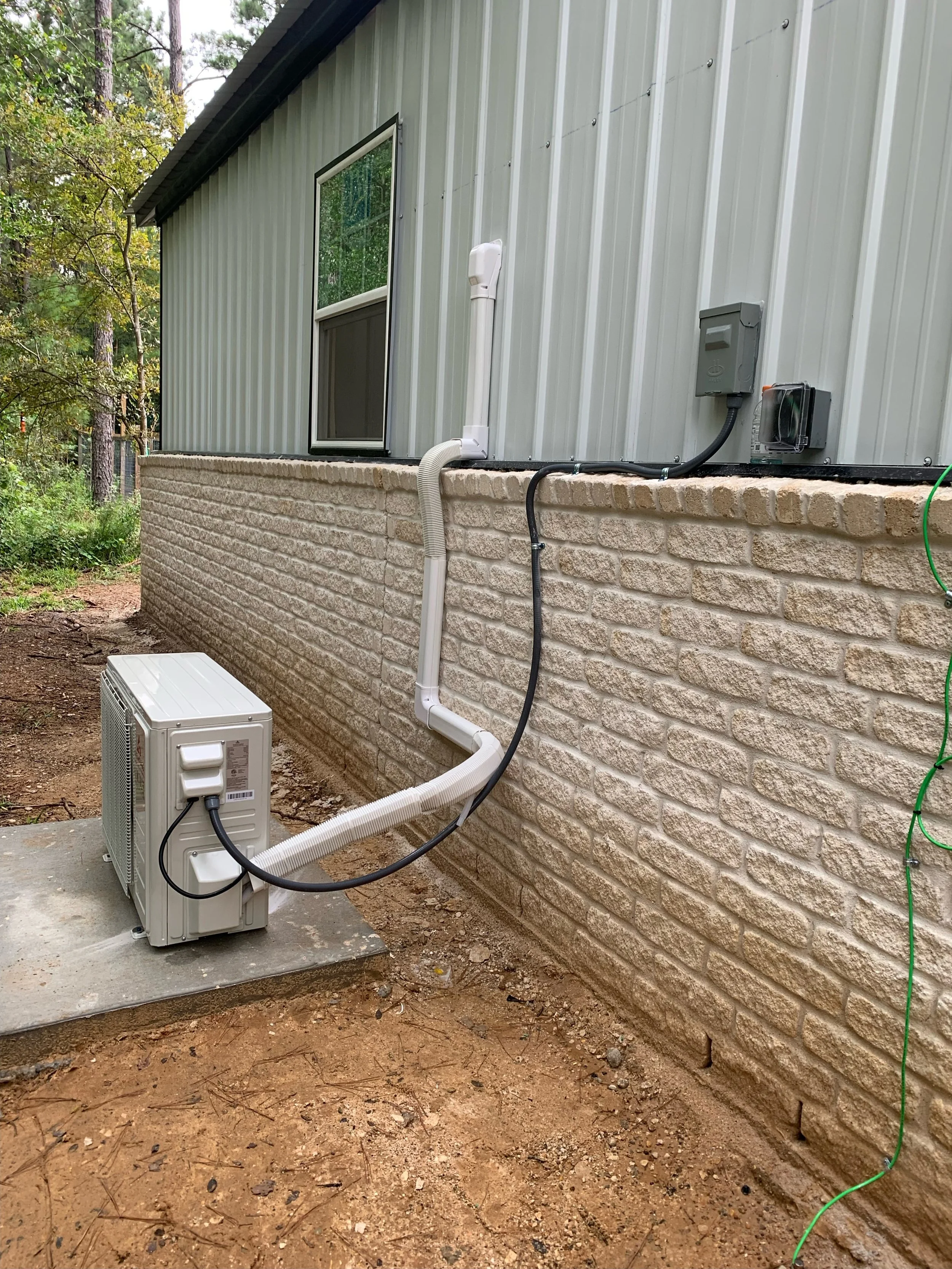
A ductless mini split system is made up of an outdoor condenser and one or more indoor air handlers. These units are connected by refrigerant lines, communication wiring, and a drain line. Together, they move heat in or out of the space depending on whether the system is cooling or heating.
How Mini Splits Heat and Cool
Mini splits do not create cold air the way many people imagine. Instead, they move heat.
When the system is in cooling mode, the indoor unit pulls warm air from the room and passes it over a cold evaporator coil. The refrigerant inside the coil absorbs heat from the indoor air. The system then sends that heat through the refrigerant lines to the outdoor condenser, where it is released outside.
Once the heat is removed, the indoor air handler blows cooler air back into the room.
In simple terms:
- The indoor unit removes heat from the room
- The refrigerant carries that heat outside
- The outdoor unit releases the heat outdoors
- The indoor unit sends cooler air back into the space
This process is highly efficient because the system is transferring heat instead of constantly generating new heating or cooling energy.
In heating mode, a mini split heat pump reverses the process. It pulls heat from the outdoor air and transfers it inside. Even when it feels cold outside, there is often still usable heat energy in the air. This makes mini splits useful for both cooling and heating, especially in southern climates where winters are usually mild.
Why This Matters in Hot Climates
In hot climates like Texas, Louisiana, Alabama, Mississippi, Georgia, and Florida, cooling performance matters more than almost anything else. Long summers, high humidity, and intense sun can make garages, upstairs rooms, home offices, shops, and additions extremely uncomfortable.
Mini splits perform well in hot climates because they are designed to cool specific areas quickly and efficiently.
One of the biggest benefits is that they do not depend on long duct runs. Traditional ductwork can lose cooled air, especially when ducts run through hot attics, garages, or crawlspaces. In southern homes, attic temperatures can get extremely high, and that can make duct losses even worse.
With a ductless mini split, the cooling is delivered directly into the room. That means less energy is wasted before the cool air reaches the space.
Mini splits are especially helpful for:
- Garages that get too hot in the summer
- Sunrooms with lots of windows
- Upstairs bedrooms that never cool properly
- Home offices with computers and electronics
- Shops and metal buildings
- Tiny homes and backyard studios
- Additions without existing ductwork
- Rental units and mother-in-law suites
Zoned Comfort: Cooling the Rooms You Actually Use
One of the biggest advantages of a mini split system is zoned comfort. Zoned comfort means each space can have its own temperature control.
With a traditional central HVAC system, the thermostat usually controls the entire home from one location. That can create hot and cold spots. One room may feel freezing while another room still feels warm. This is common in homes with poor duct design, older insulation, high ceilings, upstairs bedrooms, or rooms with heavy sun exposure.
Mini splits solve this problem by letting you control the temperature in individual rooms or zones. For example, you can keep:
- A garage cool while working during the day
- A bedroom colder at night
- A home office comfortable during business hours
- A sunroom usable during the summer
- A workshop cool without cooling the whole house
This is a major benefit in hot climates because not every room heats up the same way. A west-facing room may get blasted by afternoon sun. A garage may hold heat from vehicles, tools, and concrete. An upstairs room may trap warm air. Zoned mini splits allow each space to be treated based on its actual cooling needs.
Energy Efficiency Benefits
Mini splits are known for energy efficiency, especially when compared to cooling spaces with window units, portable AC units, or poorly designed duct systems.
Many mini splits use inverter technology. Instead of turning fully on and fully off all day, an inverter mini split can adjust its speed based on the demand in the room. That means the system can run at lower speeds for longer periods, maintaining a steady temperature without big energy spikes.
This helps with:
- Lower energy waste
- More consistent comfort
- Quieter operation
- Better temperature control
- Less wear from constant starting and stopping
In hot climates, this is a big deal. During long summer days, an HVAC system may run for many hours. A system that can adjust its output instead of constantly cycling on and off can help improve comfort and reduce unnecessary energy use.
Humidity Control in Hot, Humid Areas
In places like Houston and the Gulf Coast, comfort is not just about temperature. Humidity plays a huge role.
High humidity can make a room feel warmer than it actually is. It can also make indoor air feel sticky, heavy, and uncomfortable.
Mini splits can help remove moisture from the air as they cool. When warm indoor air passes over the cold coil inside the air handler, moisture condenses and drains away through the system's drain line.
For example, a room at 75 degrees with lower humidity may feel better than a room at 72 degrees with high humidity. A properly sized and installed mini split can improve comfort by cooling the air and helping reduce indoor humidity.
Single-Zone vs. Multi-Zone Mini Splits
Single-zone systems connect one outdoor condenser to one indoor air handler. They are the most popular choice because they are simple, effective, and affordable. A single-zone mini split is ideal for garages, bedrooms, home offices, sunrooms, workshops, tiny homes, additions, and small metal buildings.
Multi-zone systems connect one outdoor condenser to multiple indoor air handlers. Each indoor unit serves a different room or area, allowing multiple rooms to have independent temperature control while sharing one outdoor unit. Multi-zone systems are great for small homes, cabins, rental units, barndominiums, and additions with several rooms.
Why Proper Sizing Matters
For mini splits to perform well, proper sizing is extremely important.
A unit that is too small may struggle to cool the space during extreme heat. A unit that is too large may cool the room too quickly without removing enough humidity — leaving the room feeling cold but still damp or uncomfortable.
Sizing depends on more than square footage. Important factors include:
- Room size and ceiling height
- Insulation quality
- Window size and direction
- Sun exposure
- Number of people using the space
- Heat-producing equipment
- Garage doors or metal walls
- Whether the space has spray foam insulation
In hot climates, sizing should account for heavy summer heat and humidity. A professional installer can help determine the right BTU size for the space.
Ready to Talk?
Give us a call — we'll give you a straight answer on what system makes sense for your space, with no pressure and no runaround.