
May 28, 2026
Mini Split Efficiency, Noise, and Maintenance: How Ductless HVAC Systems Work
Mini splits are known for being efficient, quiet, and low-maintenance — but only when installed and cared for correctly. Here's what homeowners in hot climates need to know.
Mini split HVAC systems are popular because they are efficient, quiet, and flexible. They can heat and cool individual rooms without ductwork, which makes them a great option for garages, bedrooms, home offices, sunrooms, workshops, tiny homes, additions, and metal buildings.
For homeowners in hot climates, mini splits can be especially valuable because they provide direct cooling where it is needed most, help reduce wasted energy, and can make difficult spaces much more comfortable.
Why Mini Splits Are Energy Efficient
One of the biggest reasons homeowners choose mini splits is efficiency.
Traditional central HVAC systems use ductwork to move air throughout a home. That works well in many houses, but ductwork can lose cooled or heated air, especially when ducts run through hot attics, garages, crawlspaces, or poorly insulated areas.
Mini splits are ductless, which means they deliver conditioned air directly into the room. Less air is wasted before it reaches the space.
In hot climates like Texas, this matters a lot. If your ductwork is sitting in a hot attic during the summer, your system may be working harder just to deliver cool air to the room. A mini split avoids much of that problem by placing the indoor air handler directly in the space.
Inverter Technology: The Secret Behind Smooth Operation
Many modern mini splits use inverter technology.
A traditional AC system often turns fully on, runs hard, then shuts off. This is called cycling. The temperature goes up, the system turns on again, and the pattern repeats.
A mini split with inverter technology works differently. Instead of constantly turning completely on and off, it can adjust its speed based on what the room needs. That means the system may run at a lower speed for longer periods of time, keeping the room temperature more steady.
Benefits of inverter operation include:
- More consistent comfort
- Less energy waste
- Quieter operation
- Better humidity control
- Less wear from hard starts and stops
- Improved performance during long summer days
For hot climates, this is one of the best features of a mini split. The system can keep working steadily instead of fighting big temperature swings all day.
Can a Mini Split Do Both Heating and Cooling?
Yes. Many mini splits are heat pumps, meaning they provide both cooling and heating.
In cooling mode, the mini split removes heat from inside the room and releases it outside. In heating mode, the system reverses that process — it pulls heat from the outdoor air and moves it inside.
That may sound surprising, but even cool outdoor air can still contain usable heat energy. This is why heat pump technology works so well, especially in southern climates where winters are usually mild.
For homeowners in places like Houston, East Texas, Louisiana, Mississippi, Alabama, and Georgia, winters are usually not extreme for long periods. That makes a mini split heat pump a strong option for year-round comfort — without needing electric space heaters, propane heaters, or inefficient portable units.
How Loud Is a Mini Split?
Mini splits are known for being very quiet compared to window units, portable AC units, and many traditional HVAC systems.
The indoor unit is usually very quiet. On low fan speed, many mini split indoor units sound like a soft fan or light airflow. In a bedroom, office, or living space, you can often hold a normal conversation, watch TV, work, or sleep without the system being distracting.
The indoor unit may get slightly louder when the fan speed is set high, the room is very hot and needs fast cooling, or the filters are dirty.
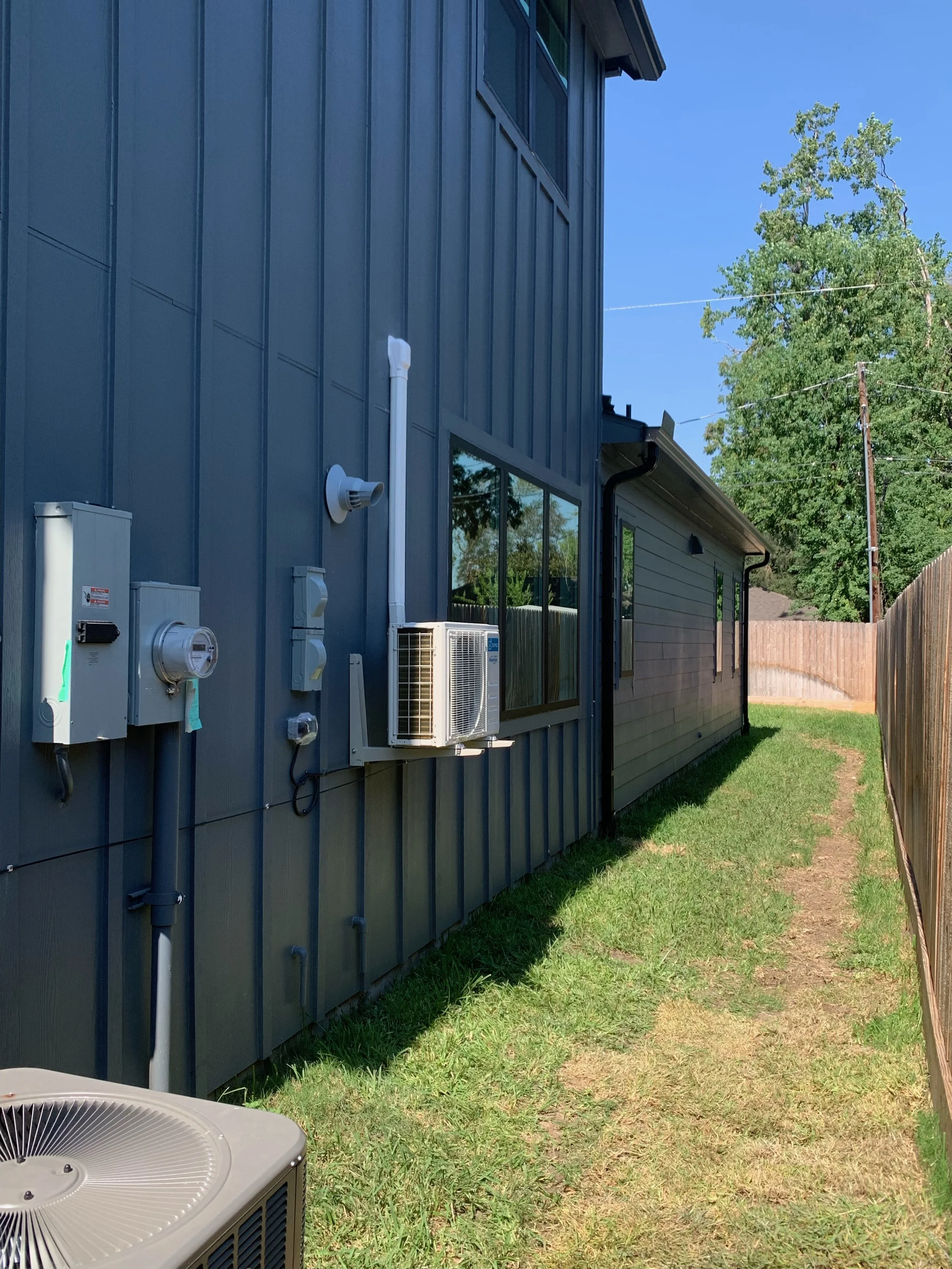
The outdoor condenser is also usually quieter than many traditional outdoor AC units. When installed correctly with proper clearance and a stable mounting surface, outdoor mini split condensers are generally not loud.
Outdoor noise can increase if the unit is mounted poorly, the bracket vibrates, the unit is too close to a wall or corner, or leaves and debris block airflow.
Installation quality matters. A mini split can be louder than it should be if the outdoor unit is not mounted securely, if the line set is not supported properly, or if vibration transfers into the wall. A quiet system starts with proper installation.
What Maintenance Does a Mini Split Need?
Mini splits are efficient, but they still need regular maintenance to keep running properly. A neglected mini split can lose efficiency, develop odors, leak water, freeze up, or struggle to cool. In hot and humid climates, maintenance is especially important because the system may run often and remove a lot of moisture from the air.
Homeowner Maintenance
The most important task is cleaning the filters. Most indoor mini split units have washable filters that should be cleaned every few weeks during heavy use, or at least once a month.
Basic homeowner maintenance includes:
- Cleaning the indoor filters
- Keeping furniture and curtains away from the indoor unit
- Making sure the outdoor unit has airflow
- Removing leaves, grass, and debris around the condenser
- Watching for water leaks
- Listening for unusual noises
Professional Maintenance
A professional mini split service goes deeper than filter cleaning. It may include:
- Cleaning the indoor coil and blower wheel
- Checking and flushing the drain line
- Cleaning the outdoor condenser coil
- Inspecting refrigerant lines
- Checking electrical connections
- Testing system operation and temperature split
- Looking for signs of refrigerant leaks
- Inspecting mounting and vibration issues
For most homes, professional maintenance once or twice a year is a good idea. For heavy-use spaces like garages, shops, or rental units, it may be needed more often.
Signs Your Mini Split Needs Maintenance
A mini split may need service if you notice:
- The room is not cooling like it used to
- The airflow feels weak
- The unit smells musty
- Water is dripping from the indoor unit
- Ice forms on the coil or refrigerant lines
- The outdoor unit is louder than normal
- The system turns off unexpectedly
- Energy bills are rising
- The unit shows an error code
These signs should not be ignored. Small problems can become bigger problems if the system keeps running under stress.
Why Maintenance Matters More in Hot, Humid Climates
In hot, humid areas, mini splits often work hard for many months of the year. They also pull moisture from the air while cooling — and that moisture drains through the system.
If the drain line becomes clogged or the indoor unit gets dirty, problems can happen quickly. For Houston and Gulf Coast homeowners, cleaning and drain care are especially important because humidity is a daily battle during much of the year.
Common maintenance-related issues include water leaking from the indoor unit, musty smells, weak airflow, poor cooling, ice forming on the coil, higher energy use, and clogged drain lines.
Why Hire a Mini Split Specialist?
Mini splits are different from traditional central HVAC systems. A company that specializes in ductless systems understands how to clean, service, diagnose, and maintain them properly.
A mini split specialist like Windsanity understands how ductless systems operate, how hot climates affect performance, and how garages, shops, and metal buildings change the load on a system. That experience matters because mini splits are not just smaller versions of central AC systems — they have their own design, installation details, maintenance needs, and troubleshooting steps.
For homeowners who want dependable performance, professional installation and maintenance from a mini split specialist can make all the difference.