
May 28, 2026
Mini Split Installation Cost: Price, Timeline, DIY Options, and Why Hiring a Pro Matters
What does it actually cost to install a mini split? This guide covers pricing factors, how long installation takes, the real risks of DIY, and why professional installation protects your investment.
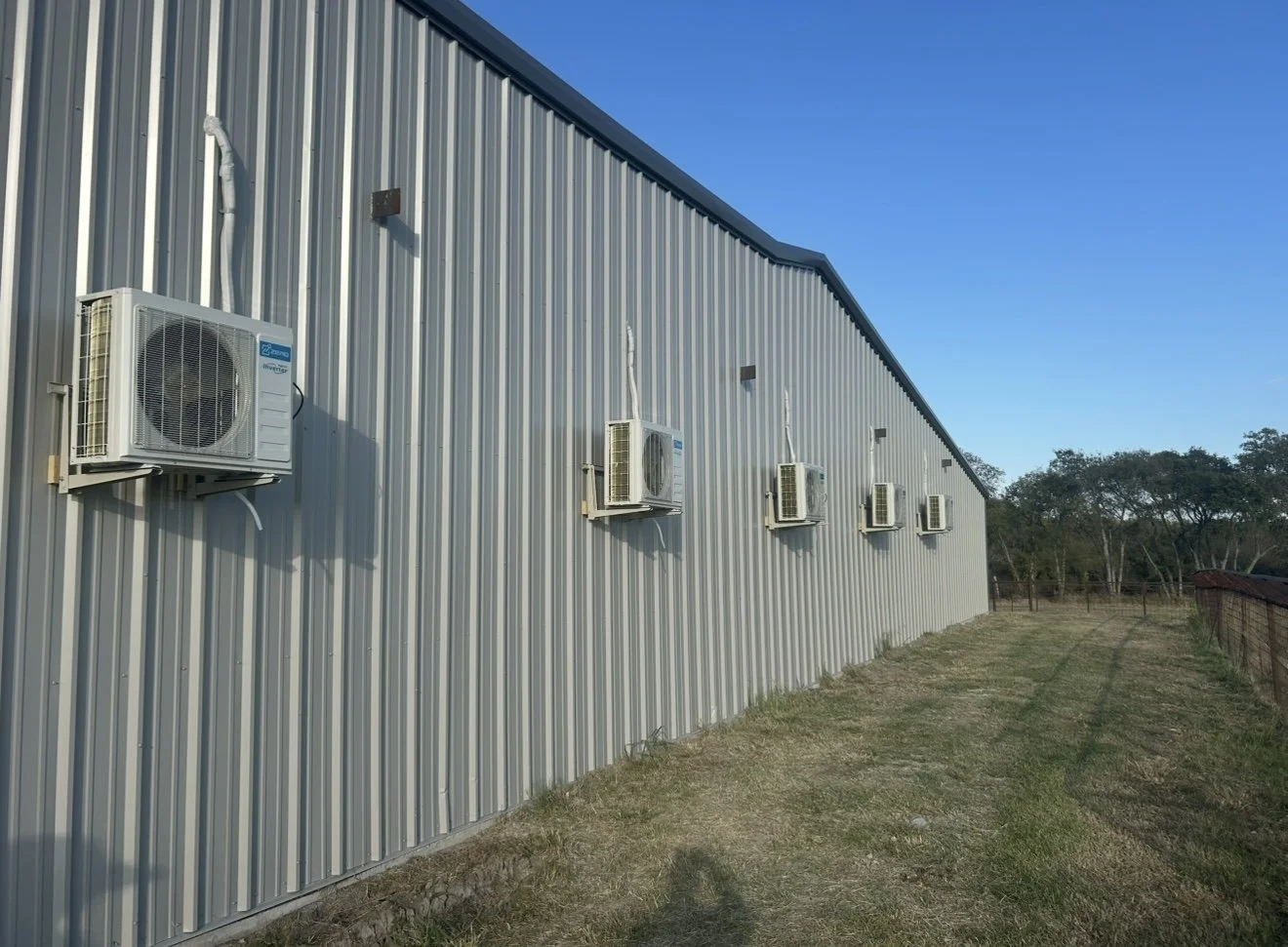
Mini split HVAC systems have become one of the most popular heating and cooling options for homeowners who want comfort without major ductwork. They are efficient, quiet, flexible, and especially helpful for garages, bedrooms, additions, workshops, sunrooms, tiny homes, and metal buildings.
But one of the first questions homeowners ask is simple: How much does it cost to install a mini split?
The honest answer is that mini split installation cost depends on the size of the system, the number of zones, the brand, the electrical setup, and how complex the installation is. A simple single-zone installation on an exterior wall will usually cost less than a multi-zone system serving several rooms.
The good news is that mini splits can be one of the most affordable ways to add heating and cooling to a space, especially when compared to adding ductwork or replacing an entire central HVAC system.
What Affects the Installation Price?
Mini split pricing is not one-size-fits-all. A garage, bedroom, office, and metal building may all need different system sizes and installation setups.
1. BTU Size
BTU stands for British Thermal Unit — in simple terms, it measures how much heating or cooling power the system has.
Common mini split sizes include 9,000 BTU, 12,000 BTU, 18,000 BTU, 24,000 BTU, and 36,000 BTU. A small bedroom or office may only need a 9,000 or 12,000 BTU system, while a larger garage, shop, or open space may need 18,000 BTU or more.
In hot climates like Texas, proper sizing is especially important. If the system is too small, it may struggle during extreme summer heat. If it is too large, it may cool too quickly without removing enough humidity.
2. Single-Zone vs. Multi-Zone
A single-zone mini split has one outdoor condenser connected to one indoor air handler. This is usually the most affordable setup and works great for one room or one open area — garages, bedrooms, home offices, sunrooms, workshops, tiny homes, and additions.
A multi-zone mini split has one outdoor condenser connected to multiple indoor air handlers, allowing several rooms to be controlled separately. Equipment and installation cost are higher, but it's the right choice for multiple bedrooms, small homes, rental units, barndominiums, and homes without ductwork.
3. Electrical Work
Some mini split installations require a new electrical circuit. A professional installer will determine whether the home has the proper power available for the system. Larger systems may require more electrical capacity than smaller units.
Electrical factors include:
- Distance from the breaker panel
- Breaker size and voltage requirements
- Whether a new circuit is needed
- Disconnect box location
This is one of the biggest reasons professional installation matters. Mini splits are not just "plug-and-play" systems.
4. Line Set Length
The line set connects the indoor unit to the outdoor unit. A standard installation is often simpler when the indoor air handler is mounted on an exterior wall and the outdoor unit is nearby. Longer line runs require more materials and labor.
The line set includes copper refrigerant lines, insulation, communication wire, drain line, and line set cover.
5. Installation Location
A simple installation on an exterior wall is usually easier and more affordable. A more complex installation involving interior walls, longer runs, difficult access, or unusual mounting locations costs more.
In hot climates, garages and metal buildings often require extra attention because insulation, ceiling height, sun exposure, and door openings can all affect performance.
How Long Does Installation Take?
Most standard single-zone mini split installations can be completed in one day.
A basic installation includes: mounting the indoor air handler, mounting or setting the outdoor condenser, running the refrigerant line set and drain line, connecting communication wiring and electrical components, vacuuming the refrigerant lines, pressure testing, starting up the system, and walking the customer through how to use it.
More complex jobs — multiple indoor units, longer line runs, electrical work, difficult access — may take one to two days or more.
Can You Install a Mini Split Yourself?
Many homeowners ask about DIY installation. Some mini split systems are marketed as DIY-friendly, but that does not mean every installation is simple or risk-free.
A mini split installation involves more than hanging a unit on the wall. It may require electrical work, refrigerant line connections, proper drainage, vacuuming the lines, leak testing, and system startup. If any of these steps are done incorrectly, the system may not perform properly.
Common DIY Problems
DIY installations commonly run into:
- Refrigerant leaks from bad flare connections
- Poor drainage causing water leaks inside the home
- Wrong unit sizing
- Poor placement leading to uneven cooling
- Electrical mistakes
- Voided warranty
- Shortened system life
One of the most common issues is a bad flare connection. Mini split copper lines must be prepared and tightened correctly — if the flare is damaged, loose, overtightened, or misaligned, refrigerant can leak out.
Another common issue is poor drainage. If the drain line is not pitched properly, water can back up and leak from the indoor unit. In hot, humid climates, drainage problems create serious comfort and water damage issues.
Is DIY Worth It?
DIY may look cheaper upfront, but it can cost more later. A homeowner may save on labor, but they take on the risk of buying the wrong size system, damaging the refrigerant lines, losing warranty protection, and needing a professional to fix the installation later.
For a small shed or basic space, some homeowners may consider a DIY unit. But for a home, garage, office, rental unit, or any space that needs reliable performance, professional installation is the safer choice.
Why Hire a Professional?
Hiring a professional mini split installer gives homeowners more than convenience — it gives peace of mind.
Correct System Sizing
A professional can help choose the right BTU size for the space. Sizing is not just about square footage. It also depends on ceiling height, insulation, windows, sun exposure, room use, number of people, heat-producing equipment, garage doors, metal walls, spray foam insulation, and local climate.
In Texas and other hot southern states, undersizing can leave a room uncomfortable in the summer. Oversizing creates humidity problems.
Proper Placement
Where the indoor and outdoor units are placed matters. The indoor unit should be positioned for good airflow, easy service access, and proper drainage. Bad placement leads to poor airflow, uneven cooling, drainage problems, shorter equipment life, and reduced efficiency.
Refrigerant Line Protection
Poor refrigerant work can cause weak cooling, error codes, compressor damage, and expensive repairs. A specialist knows how to prepare flare connections, avoid kinks in copper lines, insulate the lines properly, pressure test the system, vacuum the lines, and check for leaks.
Better Performance in Hot Climates
In places like Houston, East Texas, Louisiana, Mississippi, Alabama, Georgia, and other southern areas, heat and humidity are not small details — they are the main challenge. A mini split specialist understands that comfort is not only about dropping the temperature. It is also about airflow, humidity removal, sizing, and placement.
Why Choose Windsanity?
Not every HVAC company focuses on mini splits. Some companies mainly work on central air systems and only install ductless systems occasionally.
Windsanity Mini Split specializes in ductless mini split heating and cooling — and that focus matters. We understand the real-world applications: garages, shops, metal buildings, tiny homes, sunrooms, home offices, additions, barndominiums, mother-in-law suites, rental units, and converted spaces. Each space has different needs, and we recommend a setup based on the actual space — not just a basic square footage chart.
As a veteran-owned company, we're focused on honest service, clear communication, and dependable workmanship.
One of the biggest mistakes homeowners make is buying a mini split online before knowing if it is the right system for the space. We can help answer important questions before installation: What size do I need? Will this work in my garage? Do I need a 120V or 240V system? Will I need electrical work? Getting these answers before buying can save money, time, and frustration.
Final Thoughts
A proper installation affects cooling performance, heating performance, energy efficiency, humidity control, noise level, system lifespan, and warranty protection. When installed correctly, a mini split can provide years of quiet, efficient comfort. When installed poorly, it becomes a headache.
For homeowners in hot climates, a professionally installed mini split can cool hard-to-comfort spaces, reduce wasted energy, improve room-by-room control, and make garages, shops, offices, and additions usable year-round.
Give us a call — we'll walk you through your options and give you a straight answer on what makes sense for your space.